
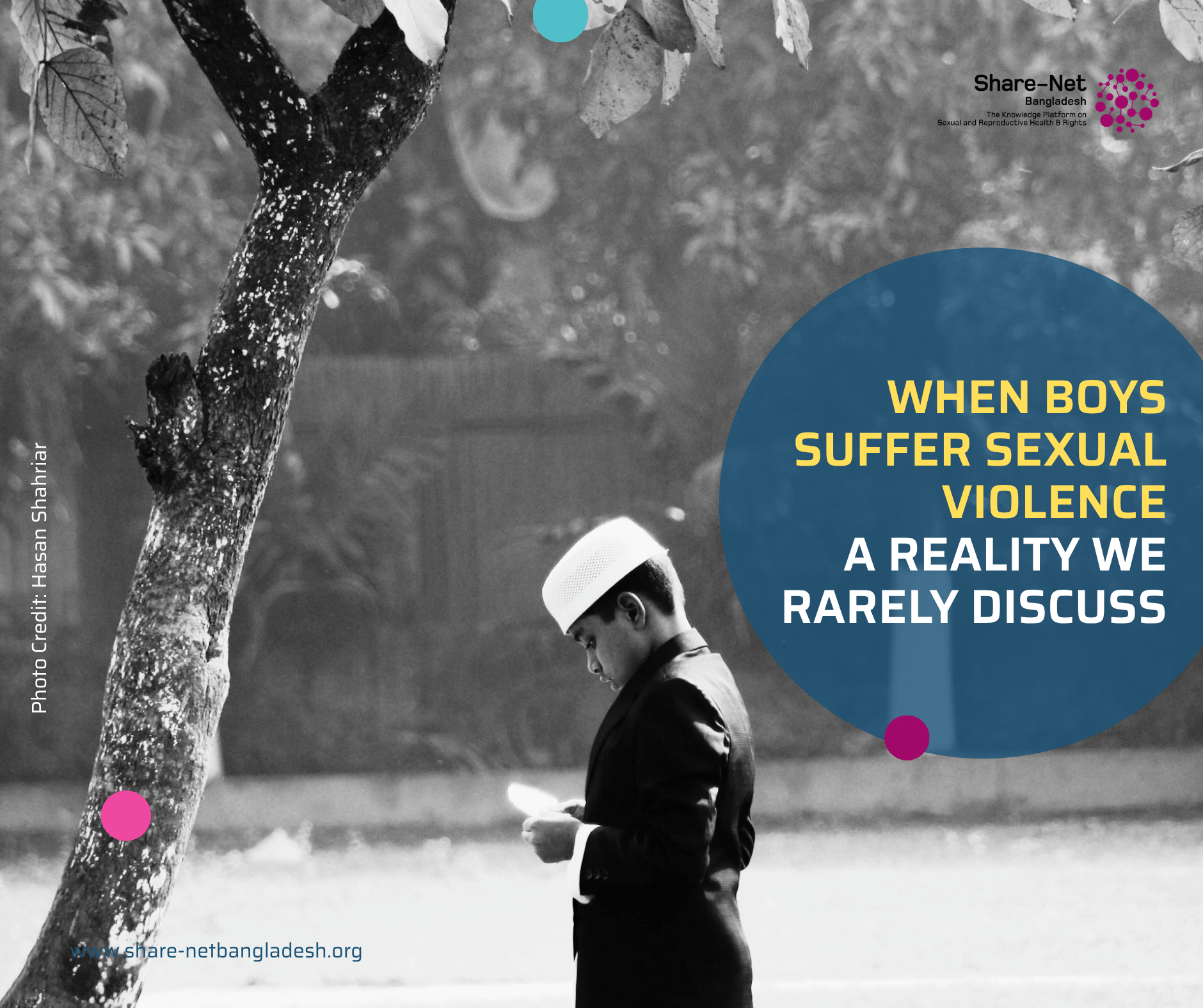
When Boys Suffer Sexual Violence: A Reality We Rarely Discuss
What happens when the victims of sexual violence are boys? Are their experiences being recognised, reported and addressed with the seriousness they deserve?
Sexual violence in madrassahs is a long-standing concern in Bangladesh, yet the scale of the problem remains difficult to ignore. Between May and August, at least seven cases involving rape and sexual harassment were reported at madrassahs in Savar. According to Ain O Salish Kendra, 52 boys were reported as rape victims between January and August this year, with most of them allegedly abused in madrassahs, mainly by teachers or older students.
The concern extends beyond individual cases. Awaz Uthao’s collection of 209 anonymous depositions found that 40 per cent involved abuse in religious or educational institutions. Of those reports, 49 per cent involved qawmi madrassahs and 6 per cent involved aliya madrassahs. These figures point to a troubling reality: boys in institutions where they should be protected can also face serious sexual violence.
Yet reporting abuse is only one part of the problem. The New Age editorial highlights significant gaps in monitoring, oversight and accountability. The Directorate of Madrassah Education has no oversight over institutions outside its jurisdiction, including roughly 30,000 qawmi madrassahs operating under six qawmi boards. At the same time, although a High Court directive requires educational institutions to establish anti-sexual-harassment cells, most institutions remain non-compliant.
For boys and men, the consequences of these gaps can extend beyond the immediate violence. When institutions fail to provide safe ways to report abuse, survivors may be left without protection, justice or support. A survivor-centred response must therefore go beyond identifying and punishing perpetrators. Survivors need to be heard without blame, treated with dignity, protected from further harm and given access to appropriate emotional, health and legal support.
This is where sexual and reproductive health and rights (SRHR) must enter the conversation.
SRHR is not limited to contraception, pregnancy or reproductive health services. It also concerns bodily autonomy, dignity, safety and the right to live free from sexual violence and abuse. Boys and men, like everyone else, have the right to control what happens to their bodies and to seek support when that right is violated.
If Bangladesh’s SRHR agenda is to be truly inclusive, the sexual violence faced by boys and men cannot remain invisible. Stronger institutional oversight must go hand in hand with survivor-centred services, confidential reporting mechanisms and meaningful accountability. Every boy who experiences sexual violence should have a system that listens to him, protects him and supports his recovery—not one that expects him to remain silent.
